* You are viewing the archive for the ‘Prototypes’ Category

Technology Research 2013

Time for some research! Peter Timmerman, Master degree student in Applied Engineering – Computer Science at University College Ghent, joined us a few weeks ago for his internship and thesis on a range of technologies applicable to game prototyping and game development.

Here are some of the things Peter will have a closer look at:

  • Fast development of race games: We’re anxious to find out more on quickly generating race tracks on the fly!
  • Using sound files as input: For instance to be used in a basic lip sync algorithm, or perhaps to generate a level based on a sound file?
  • Real-time multiplayer: Peter will have a look at SmartFoxS and Exit Games’ Photon Server.
  • Adobe Flash animations in Unity3D: We’ve already tested Iggy (see earlier article), so uniSWF and/or Autodesk Scaleform will be next. At least… if we can get our hands on trial versions.
  • Location based gameplay: Using the iPhone’s GPS and compass, we’ll create a small location based game, perhaps combined with augmented reality.
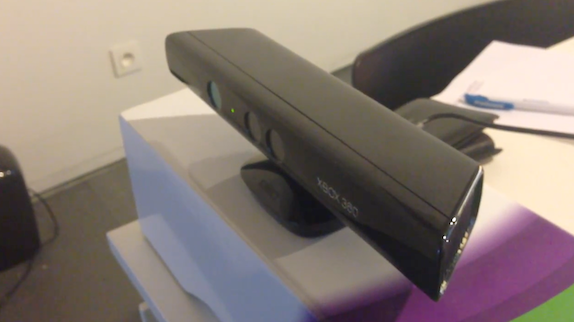
  • OpenNI: Building upon PreviewLabs’ experience prototyping for the Kinect SDK, Peter will create a playable game prototype using the OpenNI SDK and share it with the community.
  • Smart TVs: The platform of the future? Could be. Eager to learn something about game development on a Samsung Smart TV!
  • Recreating a smartphone’s 3D path: We’ll see how far we get in reconstructing the 3D trajectory of a moving smartphone, solely based on accelerometer and gyroscope data.
  • Gameplay possibilities of Brain-Computer Interfaces (BCI): We’ll use the NeuroSky MindWave to learn more about how measuring your brainwaves could affect gameplay.
  • Dual screen gameplay: Interested by the gameplay possibilities of recent Wii U and Xbox Smartglass products, we’ll see if there’s an easy way to prototype gameplay using two screens in Unity3D.

In the coming weeks we’ll be making a blogpost for each technology we’ve researched, so stay tuned!

Panic! Announced for PlayStation Mobile

Panic!, a game by Thumbs Up has been announced by Ripstone as one of the launch titles for Sony’s forthcoming PlayStation Mobile platform, and we’re proud we have developed the prototype for the game!

As mentioned on Ripstone’s website:

Panic! is a top-down action puzzler for PlayStation Mobile that requires quick thinking and fast reflexes. A giant alien slime monster is attacking the city! What can you do? Help a few survivors escape the city by creating blockades. Topple houses, drop bombs and throw buoys to save those about to be swallowed by the slime!

The concept for Panic! was one of several game concepts conceived during brainstorm sessions with our team and Nicolas Marinus, Managing Director at Thumbs Up.
The prototype for the game was part of a series of prototypes that have been mentioned on the projects section of our website since more than a year, and carried the working title ‘Guide The Flood’.

Since the gamescom event of 2011, Nicolas used the prototype for pitching purposes (as can be read in this customer testimonial), and later started working with Green Hill to accelerate the pitching process.

Screenshots of the prototype and game will follow soon.

Concept art for Panic!, by Stroke Studios

Siegebreaker: Game vs Prototype

Siegebreaker – a free-to-play iPhone/iPad game by Crazy Monkey Studios, based on a prototype made by PreviewLabs – has been out for its first couple of weeks now.

During a brainstorm we organized for our customer Crazy Monkey Studios in 2010, we asked ourselves what it would be like if you could move the towers in a tower defense game. This little brainstorm exercise triggered our imagination: Towers were replaced by RPG-like heroes, walls were added to allow building mazes, and a king was added as moveable target for the enemies. The core concept for Siegebreaker was born!

The reviews aren’t lying – for example at AppGamer.net, the game gets a 9 out of 10 for gameplay!

July 2010, Wouter Boudry – one of our prototyping specialists – started developing the prototype. As usual, a lot of questions were still open: How much screen space should the units take? Should all the enemies take the shortest route to the king, or should they rather swarm towards him? And most important: will the core gameplay be strong enough to be the foundation for a great game?

Left: The prototype graphics have been kept simple and clean, allowing to focus all budget and attention on the gameplay.
Right: Crazy Monkey Studios developed a vibrant art style featuring animated characters which were drawn frame-by-frame using old school methods.

To help answering these questions, we’re using our tuning system. This system allows us (and the customer) to play around with different settings and different feature combinations.

Left: The tuning parameters that were available in the prototype for the 'shotgunner' hero.
Right: In the final game, the heroes can be upgraded using power orbs.

While prototyping, we also discovered gameplay issues. For example, it could take a long time to make a unit to walk to a position on a nearby wall, having to follow the twists and turns of the maze. Wouter tackled this by allowing to build bridges between walls, allowing the heroes to move around more easily.

Left: Bridges form convenient ways to move to other parts of a level.
Right: In the final game, gates can be traversed.

Fast-forwarding to December 2, 2011, Siegebreaker has been released. They did a great job further extending the core concept for the full game, and came up with a colorful and vibrant art style. The reviews aren’t lying – for example at AppGamer.net, the game gets a 9 out of 10 for gameplay!

Left: When prototyping, we usually add simple messages to indicate the end of a level.
Right: The victory screen in the final game is simply hilarious and motivates the player to try it one more time.

Siegebreaker Announced by Crazy Monkey Studios

The “Undisclosed tower defense game with a twist” on our projects page is no longer undisclosed! The full game is called Siegebreaker and has been announced recently by our customer Crazy Monkey Studios (CMS).

Siegebreaker’s core concept was conceived at a brainstorm organized by PreviewLabs and was based on a prototype we developed for CMS.

We’re proud to have made our contribution to this game, and we’re glad to see how well CMS filled in the gaps that were left after the prototyping process; the story is really crazy, and the graphics – all drawn frame by frame using old school animation techniques – are very vibrant and colorful.

The following video is the game’s official trailer, showing the final game in action.

Siegebreaker is due for December 2nd and will be released for iPhone, iPod Touch, iPad and Android devices.

2D Game Prototyping in Unity3D: Orthographic Projection

After having discussed Unity3D’s GUI class and the GUISpriteUI system as two different methods of creating 2D games in Unity3D, we’re now ready to discuss a third method: combining 3D graphics with orthographic projection.

For this to work, you’ll have to create a scene in 3D, and then set up the camera to use orthographic projection instead of perspective projection.

If all you want is to use 2D textures, you can simply create cubes and assign them materials with these textures.

The fact you’re using a 3D engine to create your 2D graphics actually allows you to do more than that; the possibilities include using the physics engine, or use 3D animation blending for your characters.

To set up your camera correctly, you have to set Projection to Orthographic, and you have to set the Orthographic Size.

Especially in prototypes where the physics engine needs to be used, this can come in very handy. The following video gives you a peek behind the scenes of the Gremlin and Bayou Bird prototypes:

The fifth and last post in this series about achieving 2D in Unity3D will summarize the advantages and disadvantages of the different methods, so you’ll know which method to choose depending on your needs.

Customer Testimonial: Pitching Video Game Ideas

If a game isn’t fun, it’s not worth playing.
If it isn’t meaningful, it’s not worth remembering.

Under this slogan, Nicolas Marinus of Thumbs Up Games went to the gamescom event to pitch several of his game concepts to major publishers. In order to stand out, he used prototypes we developed for him to tell his story.

This is what he wrote about his experiences pitching the concepts:

As a beginning developer, a lot of doors aren’t open to you. Getting through to publishers and investors is hard. Convincing them your idea is better than that of the competition even harder. Certainly if all you have is some text on a piece of paper.

That’s where that prototype in your pocket makes a world of difference. You get the opportunity to show the game, to let people play it.

As someone from Big Fish whom I met at the gamescom said: “This is the first time this week I get to actually play a game”.

My strategy was simple: I would walk straight past the girls at the counter and up to the first person wearing a badge from the publisher and introduce myself. “Hi, I have this prototype I really want to show someone (meanwhile I was flicking through some artwork on my iPhone), would you be the right person to talk to?”. When I found the right person, the response would generally be “You have 10 minutes”.

Concept art by Stijn Vandoorselaere, used by Thumbs Up Games to accompany the prototype for Penguin Revolution.

I learned to pitch and show two prototypes in under 5 minutes. And you know what? Most meetings turned out to last a lot longer. Partly because they liked the ideas, partly because they got to see those ideas in action.

Before attending the gamescom, my main challenge was to find a partner. Now, the challenge is to decide which partner would be best suited for me. And that’s one luxury I love to have.

BoulderBridge, Published by FromPix

Boulder Bridge, the game based on the very first prototype developed by PreviewLabs, is now released on the iOS App Store!

Funded by the Cronos group, Boulder Bridge is a co-production developed by PreviewLabs and members of Crazy Monkey Studios early 2010. As we were occupied with other projects ever since, the game hasn’t been released until now – by FromPix, a Parisian publisher specialized in digital distribution platforms.

To summarize the concept, Boulder Bridge is a bridge building style of game, where you need to build a construction to withstand a volcanic eruption.

PreviewLabs came up with the concept for the game and developed the prototype and final artwork for the title.

The game can be purchased here.

Gremlin Prototype Documentation Available

A few weeks ago, I posted the documents involved in the process of creating the prototype for the Color Collider game.

This time, I’m able to share the documentation of yet an other prototype, which carried the working title Gremlin.
Kudos to Crazy Monkey Studios, allowing us to share this with our readers!

The following documents are now available:

Color Collider Documentation Available

To shed some more light on our prototyping process, I uploaded some additional documents of the Color Cocktail prototype (Color Cocktail was the working title for the game that was released as Color Collider by Capcom Mobile).

The first document is the Prototype Description Document (PDD). This document counts two pages and summarizes the part that had to be prototyped – basically the core mechanics of the game. It also contains a list of tuning parameters to be accessible trough our live tuning system.

To quote the PDD:

Color Cocktail is a physics/logic puzzle game, in which you have to paint balls that are falling from the top of the screen, and make sure the colored balls fall in corresponding buckets at the bottom of the screen.

Two of the sketches from the brainstorm in which Color Cocktail was conceived.

Once the customer, Crazy Monkey Studios, agreed on the contents of the PDD, we started prototyping.

After the prototyping, we delivered a build of the prototype (which can be seen in this video), along with the documentation for the tuning system and design recommendations.

Next will be the documentation for the gremlin prototype, as promised in an earlier post.

Color Collider Prototype Video

A new video has been uploaded to PreviewLabs’ YouTube channel.

It shows the prototype we did for Color Collider, a game developed by Crazy Monkey Studios and published by Capcom.

The prototype was used to test the core mechanics, to find out if it’s possible to create enough interesting puzzles with these mechanics, and to pitch the game concept to publishers.

12